
Pole Barn Insulation in Andover Massachusetts
Andover Spray Foam Insulation provides professional pole barn insulation services for property owners in Andover, Massachusetts. Our spray foam insulation solutions help reduce heat loss, improve energy efficiency, and address air leakage and condensation in pole barns, workshops, agricultural structures, and metal buildings. Whether you need to insulate a pole barn during construction or upgrade an existing post-frame building, selecting the right insulation helps improve indoor comfort and thermal performance. Proper insulation also supports temperature stability in structures used for equipment storage, daily operations, and other activities throughout the year.
Our technicians evaluate roof and wall assemblies, existing materials, moisture conditions, and ventilation before recommending closed-cell spray foam, fiberglass insulation, or other suitable insulation options. Proper insulation installation helps control heat transfer, manage moisture, and maintain consistent indoor temperatures throughout Andover's cold winters and humid summers. Each project considers structural design, insulation thickness, installation accessibility, and long-term building performance requirements for optimal results.
Request a Free Quote
We will get back to you as soon as possible.
Please try again later.
OTHER SERVICES WE OFFERED:
ANDOVER Spray Foam Insulation
Complete Pole Barn Insulation Solutions in Andover
Pole barns and post-frame buildings require insulation suited to metal roofing, framing, wall panels, and building use. Whether a workshop, garage, or horse barn, the insulation material depends on construction, heating needs, and moisture exposure. Professional pole barn insulation addresses heat loss, air leakage, and condensation. Our technicians evaluate existing conditions before recommending insulation options such as closed-cell spray foam, fiberglass batt insulation, and rigid foam insulation. Each type of insulation differs in R-value, moisture resistance, and air sealing performance. Proper material selection also considers seasonal temperature changes, structural accessibility, ventilation requirements, and long-term durability under varying environmental conditions throughout Massachusetts.
Spray foam insulation provides thermal resistance and seals gaps around structural connections. Closed-cell foam offers a high R-value per inch and vapor resistance at suitable thicknesses. Fiberglass insulation requires proper support and vapor control. Rigid board insulation or foam board may provide continuous insulation to reduce thermal bridging. The best insulation material depends on barn use. Heated workshops have different insulation requirements than unconditioned buildings. Our assessments consider installation space, moisture conditions, and Massachusetts requirements. Selecting the right insulation system balances performance, compatibility, and costs for new and existing pole barns in Andover.

PROBLEM
Heat Loss, Roof Condensation, and Insulation Needs in Pole Barns Massachusetts
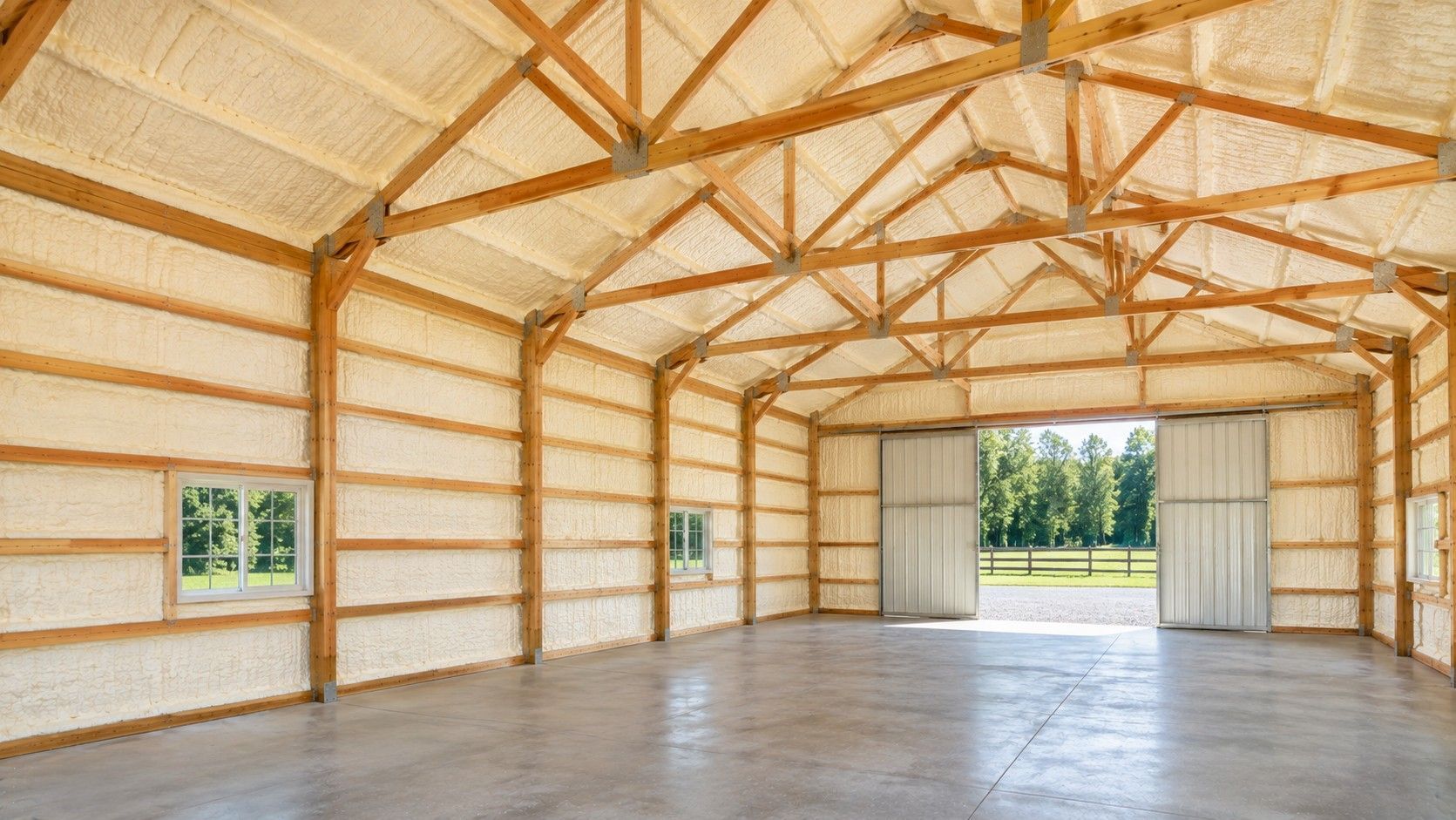
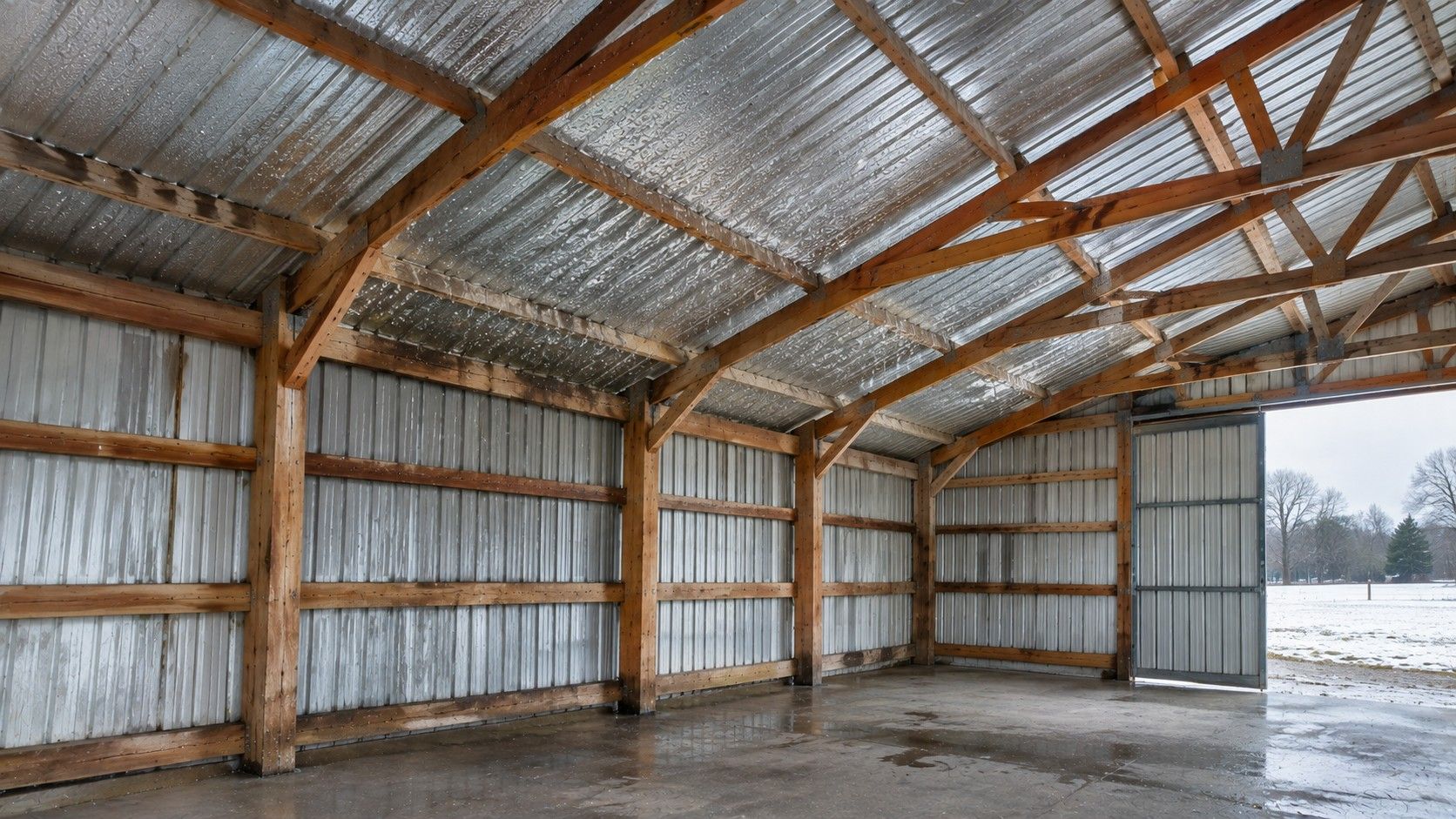
An uninsulated pole barn can experience heat loss through roofing, wall panels, and structural connections. Metal conducts heat, allowing outdoor temperatures to affect indoor conditions. During Andover's winters, heated structures may experience increased heating demand, uncomfortable conditions, and temperature differences near exterior surfaces. Summer presents challenges. Solar heat absorbed by a metal roof increases heat transfer when insulation is limited. Indoor temperatures may fluctuate depending on weather, ventilation, and building use. Condensation is common in pole barns and metal structures. When humid air contacts surfaces below its dew point, moisture collects on roofing, wall panels, and framing. Persistent condensation may cause corrosion, staining, damage, and mold growth on susceptible surfaces.
Insulation assessments identify areas that need insulation, air sealing, or moisture management. Technicians examine roof connections, wall joints, framing, and insulation to identify heat transfer and air leakage pathways. Closed-cell spray foam reduces airflow and provides thermal resistance when properly applied. Its vapor-resistant properties help manage condensation in suitable assemblies. However, insulation without ventilation or moisture control may not resolve humidity problems. Proper insulation reduces heat transfer, supports temperature consistency, and improves the barn's energy performance when heated or cooled. Results depend on insulation coverage, construction, humidity, and HVAC operation.
Have the same problem? Contact us!
OUR PROCESS
Our Pole Barn Insulation Installation Process
Our pole barn insulation process ensures proper preparation, material selection, and installation for lasting thermal performance.
Initial Inspection
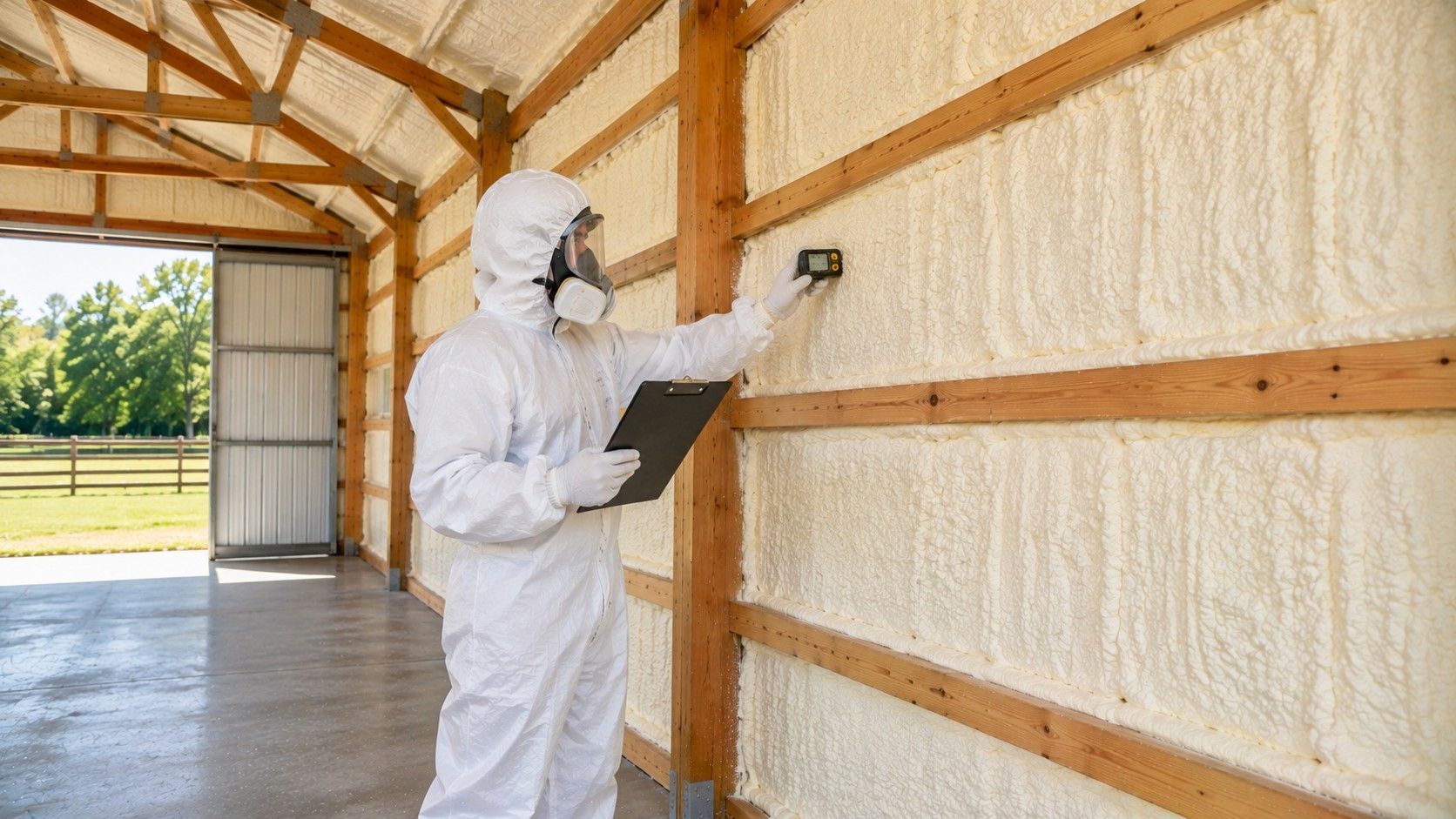
Our technicians inspect pole barn walls, roof assemblies, metal panels, framing, and existing insulation. We evaluate air leakage, moisture conditions, building dimensions, and thermal requirements to determine suitable insulation materials, installation thickness, and coverage areas. This assessment helps identify potential challenges before installation work begins.
Surface Preparation
We prepare roofing and wall surfaces by checking for corrosion, moisture, dirt, and existing coatings. Our technicians assess substrate conditions, ventilation, and moisture-control requirements to ensure compatibility with the selected spray foam insulation system. Proper preparation supports material adhesion and reduces potential installation issues while promoting consistent and reliable coverage.
Insulation Installation
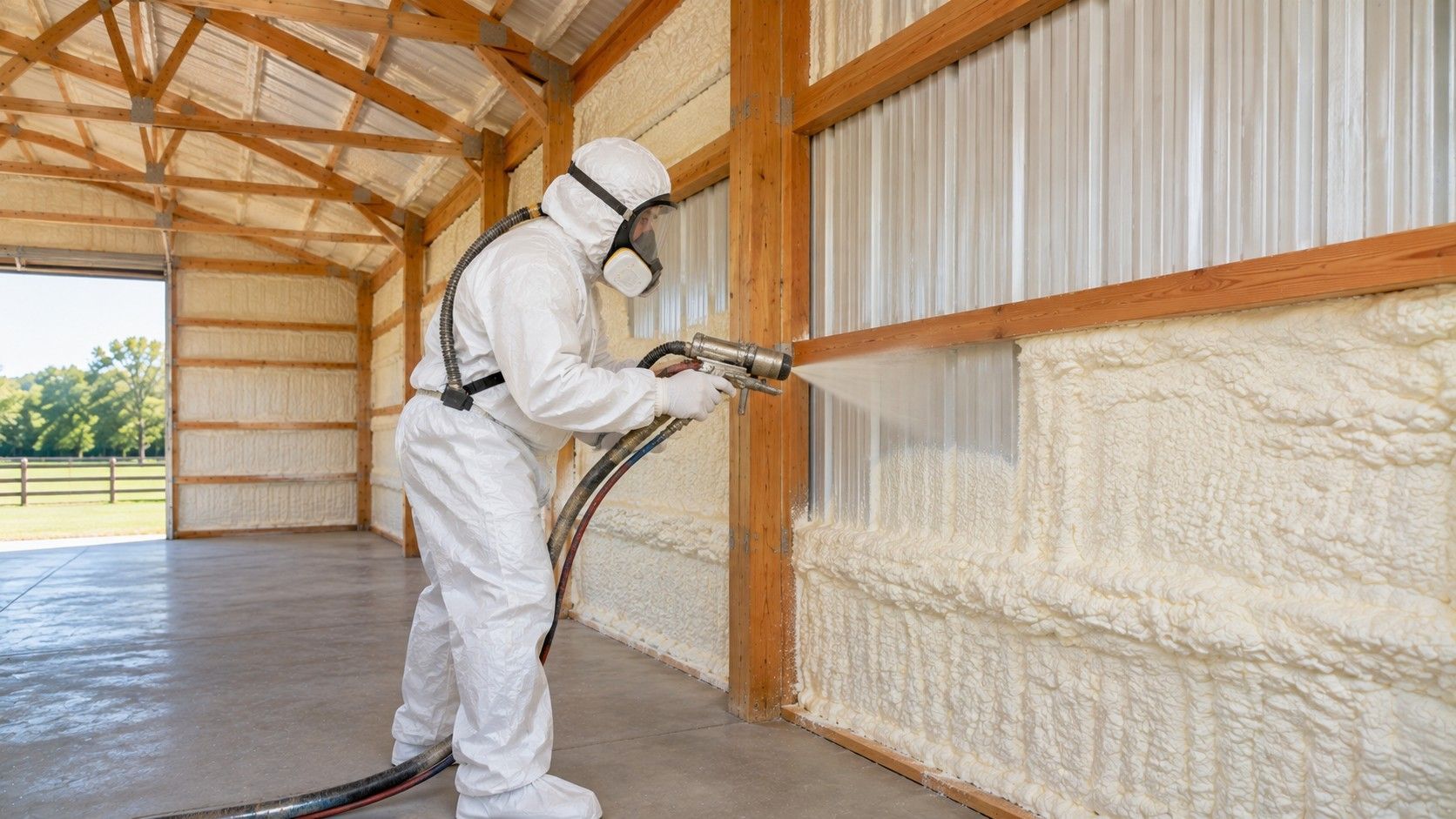
Our technicians install closed-cell spray foam, fiberglass batt, or rigid board insulation based on building requirements. We follow manufacturer specifications for material thickness, application procedures, protective equipment, ventilation, and curing to support consistent insulation coverage. Each installation considers structural connections, accessibility, and appropriate thermal performance.
Quality Inspection
After installation, we inspect accessible areas for coverage consistency, insulation thickness, and visible gaps. Our technicians review relevant moisture-control details, safety requirements, and fire protection considerations before completing cleanup and evaluating the finished insulation project. This final review helps identify areas requiring additional attention or adjustments.
COSTS
Pole Barn Insulation Costs, R-Value, and Choosing the Right Insulation Material
The cost to insulate a pole barn depends on building size, roof configuration, wall height, accessibility, and type of insulation. Material thickness, preparation, and existing conditions also affect the upfront cost.
A 30-by-40-foot pole barn has 1,200 square feet of floor area, but insulation quantities depend on the walls and roof requiring coverage. Taller walls and complex framing increase material requirements. R-value measures resistance to heat flow. Higher values indicate greater thermal resistance, although insulation performance also depends on air leakage, thermal bridging, moisture, and installation quality. Closed-cell spray foam provides a high R-value per inch and air sealing when properly applied. Required thickness depends on building construction, intended use, and thermal requirements. Fiberglass insulation offers different material costs and installation methods. Fiberglass batt products require proper support and installation to prevent gaps or compression but do not independently provide air sealing. Rigid foam insulation, including foam board, can be installed in suitable assemblies. Continuous insulation helps reduce thermal bridging through structural framing when properly designed. An older pole barn may require preparation due to damaged insulation, roof leaks, corrosion, or moisture accumulation. These conditions affect project costs. Our insulation estimate considers material quantities, labor, accessibility, preparation, and thickness. This helps barn owners choose suitable insulation based on building conditions rather than generalized pricing.
Got more cost questions?
ANDOVER Spray Foam Insulation
Why Choose Our Expert Pole Barn Insulation?
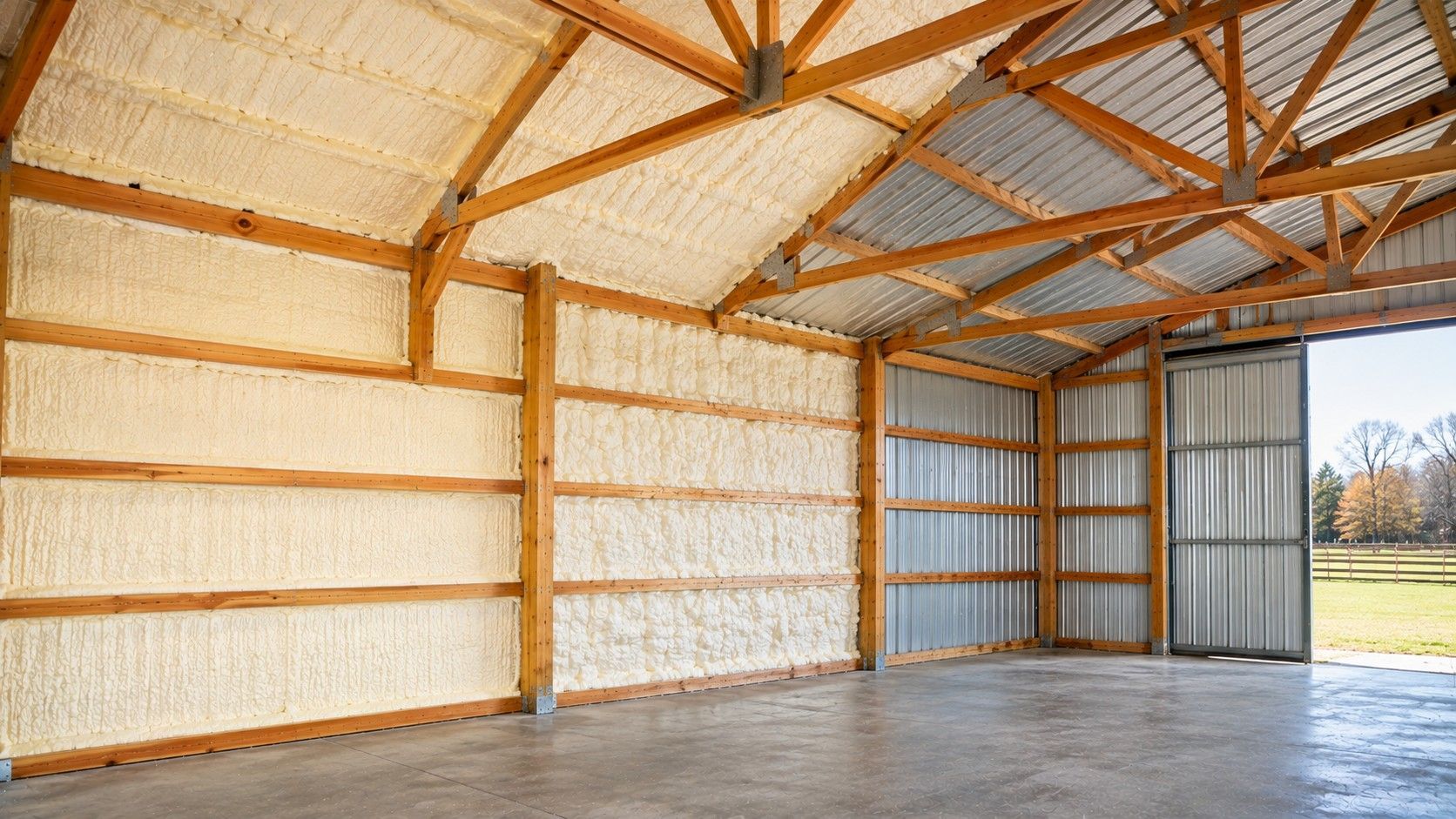
Professional pole barn insulation requires knowledge of construction, thermal resistance, air sealing, and moisture management. Andover Spray Foam Insulation evaluates building conditions before recommending materials. Effective spray foam insulation depends on proper preparation, application thickness, and compatibility. Our technicians consider these factors when planning roof insulation, wall insulation, and structural coverage. Each assessment also examines existing insulation, accessible framing, and potential air leakage pathways that may affect overall building performance. Spray foam application requires specialized equipment, protective clothing, ventilation, and manufacturer-specified procedures. Safety planning includes curing, reentry requirements, and fire protection.
Pole barns may experience condensation around metal panels and roof connections. Assessing humidity, water intrusion, and ventilation helps identify moisture-control needs. Selecting the right insulation also depends on building use. Heated workshops, storage facilities, and horse barns have different requirements. Proper material selection helps support indoor comfort and temperature stability throughout Andover's changing seasons. Our pole barn insulation services emphasize proper installation and clear planning. Property owners receive information about insulation areas, materials, preparation, and expected costs before work begins.
Real Results
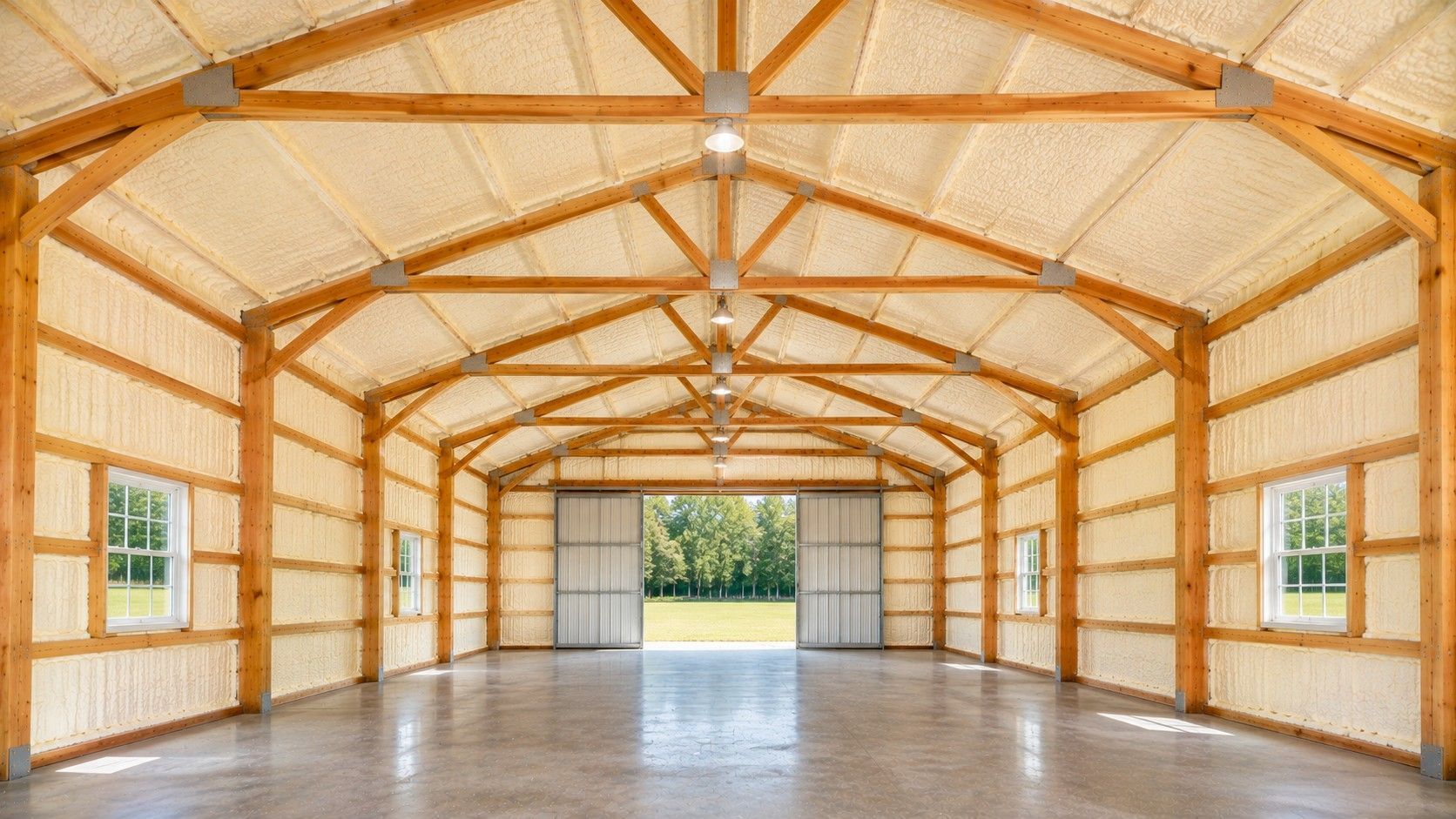
Recent Pole Barn Insulation Projects in Andover, Massachusetts
Explore our recent pole barn insulation projects completed throughout Andover, Massachusetts.
Pole Barn Insulation
Button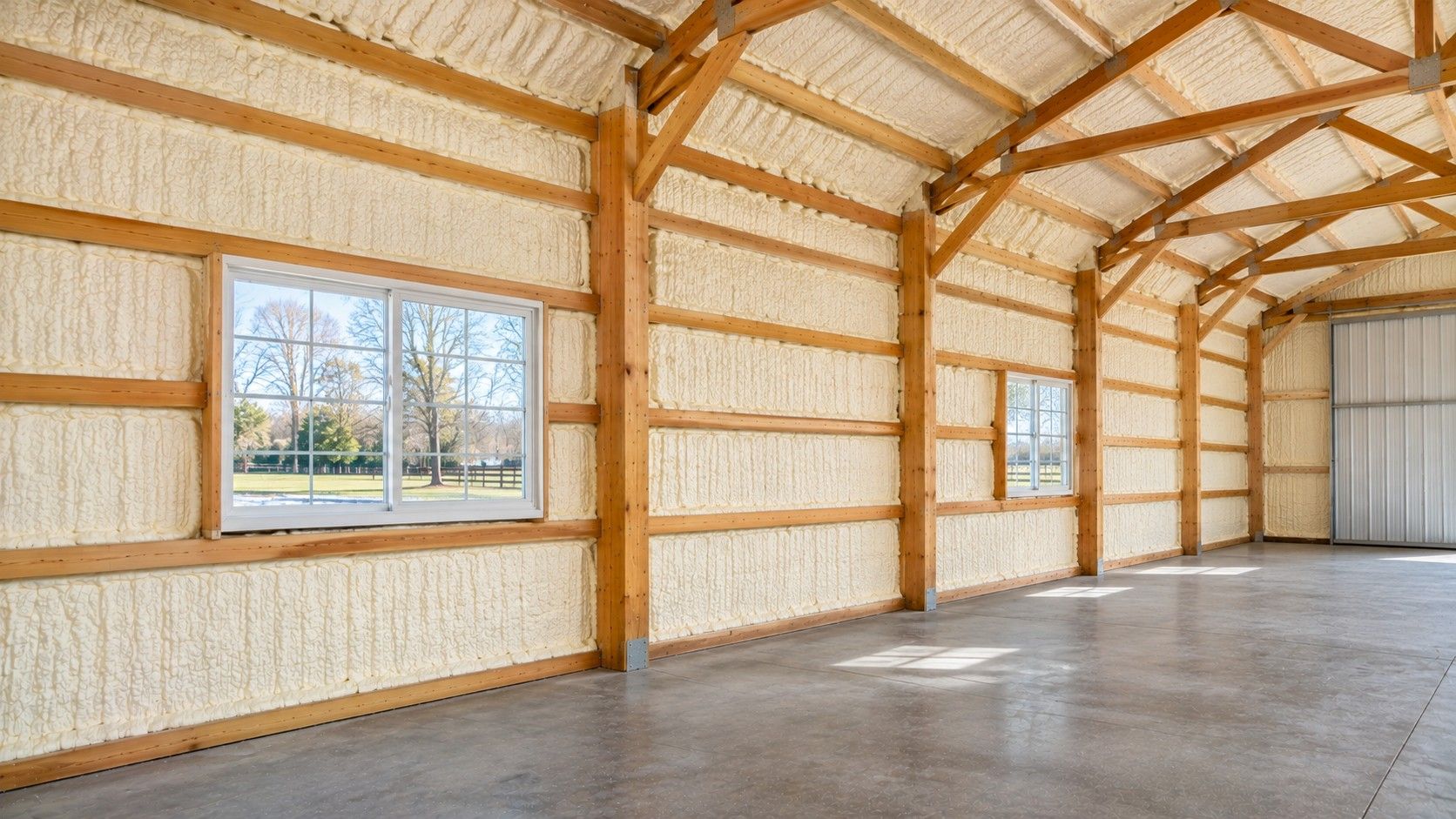
Pole Barn Insulation
Button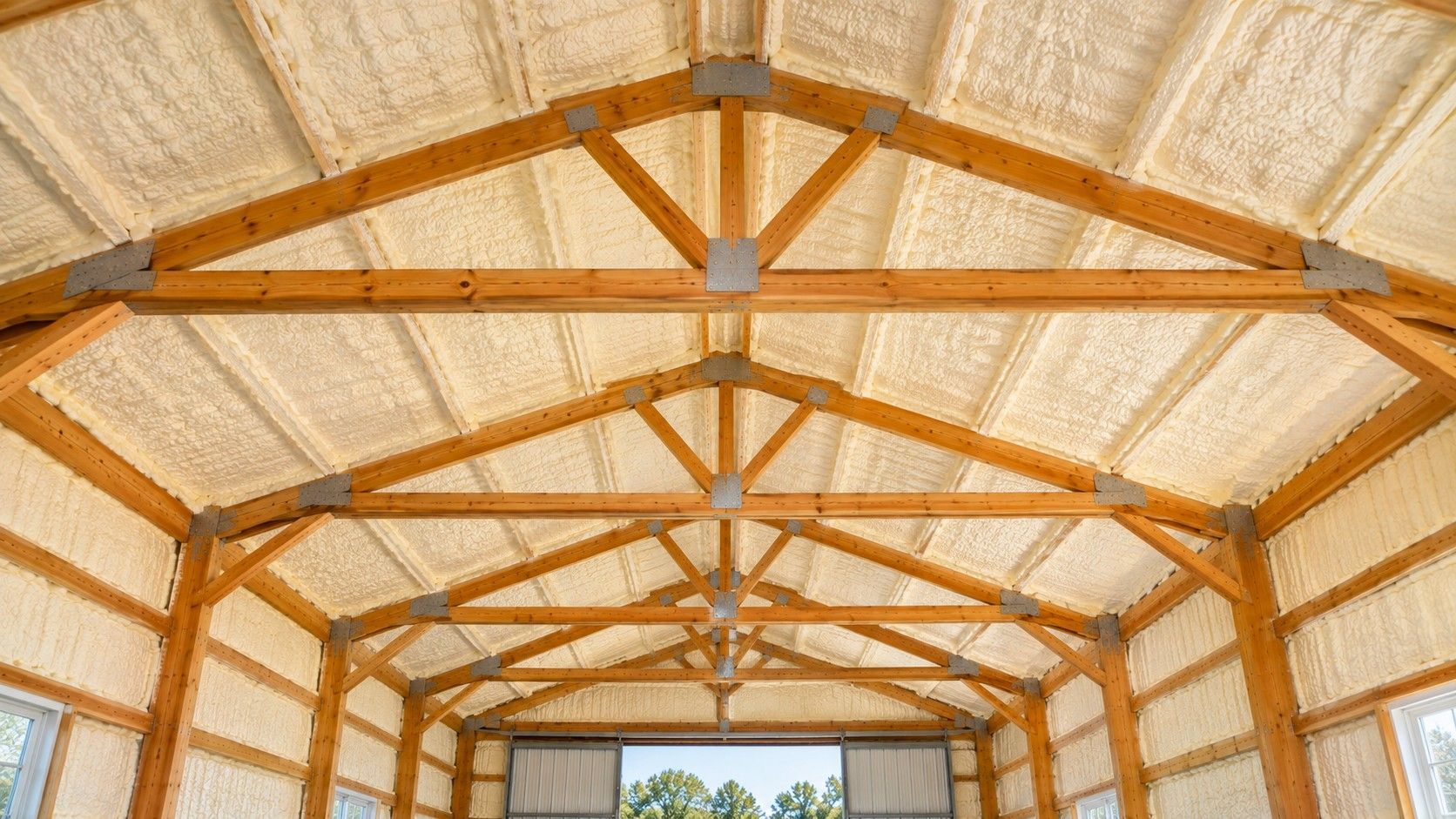
Pole Barn Insulation
ButtonEnhance Your Property’s Comfort with Insulation in Andover
Upgrade your home or commercial property with professional spray foam insulation in Andover, MA. Improve energy efficiency and indoor comfort year-round. Contact Andover Spray Foam Insulation today to discuss your needs and request a personalized project estimate.
Pole Barn Insulation
Button
Pole Barn Insulation
Button
Pole Barn Insulation
ButtonEnhance Your Property’s Comfort with Insulation in Andover
Upgrade your home or commercial property with professional spray foam insulation in Andover, MA. Improve energy efficiency and indoor comfort year-round. Contact Andover Spray Foam Insulation today to discuss your needs and request a personalized project estimate.
FAQS
Frequently Asked Questions About Pole Barn Insulation Services in Andover
Explore helpful information about pole barn insulation services in Andover, Massachusetts. Discover the differences between insulation materials, factors affecting project costs, potential energy savings, and the installation process to make informed decisions for your residential or commercial property.
What is the best insulation for pole barns in Andover, MA?
The best insulation for a pole barn depends on its construction, intended use, moisture conditions, and required R-value. Closed-cell spray foam is often suitable because it provides thermal resistance, air sealing, and vapor resistance at appropriate thicknesses. Fiberglass insulation and rigid foam are additional options for compatible assemblies. Professional technicians evaluate roofing, framing, ventilation, and local climate conditions before recommending the right insulation system.
How much does it cost to insulate a 30x40 pole barn in Andover?
A 30-by-40-foot pole barn has 1,200 square feet of floor space, but pole barn insulation costs depend on the actual roof and wall area requiring coverage. Ceiling height, insulation thickness, material selection, and installation accessibility affect the total price. Spray foam insulation requires specialized equipment and professional application. A project-specific insulation estimate should account for labor, surface preparation, existing conditions, and the building's insulation requirements.
Can spray foam insulation prevent pole barn roof condensation during winter?
Spray foam insulation can help reduce roof condensation by limiting heat transfer and uncontrolled airflow near cold metal surfaces. During Massachusetts winters, warm indoor air may contact cold roof panels and cause moisture accumulation. Closed-cell foam provides air sealing and vapor resistance when properly installed. However, insulation alone cannot eliminate every condensation risk. Technicians also evaluate indoor humidity, ventilation, existing roof leaks, and the complete roof assembly.
Should pole barn walls or ceilings be insulated first?
The installation priority depends on the building's construction, intended barn use, and existing insulation conditions. In heated structures, roof insulation or attic insulation may help reduce upward heat loss, while wall insulation limits heat transfer through exterior panels. Professional technicians inspect the building envelope to identify air leaks, thermal gaps, and moisture concerns. Coordinating insulation coverage across the walls and roof is generally more effective than following a fixed installation sequence.
Can older pole barns in Andover be insulated with spray foam?
Yes. Many older pole barns can receive spray foam insulation when their framing, roof panels, and wall surfaces are suitable. Before installing new insulation, technicians inspect existing materials, corrosion, moisture damage, and structural conditions. Closed-cell spray foam may be appropriate for certain retrofit applications after proper surface preparation. Existing leaks and damaged materials should be addressed first. Installation planning also considers ventilation, fire protection, and applicable Massachusetts building requirements.
ANDOVER SPRAY FOAM INSULATION
Request a Professional Pole Barn Insulation Installation Estimate in Andover
Every pole barn has different insulation requirements based on its construction, size, intended use, and existing conditions. Andover Spray Foam Insulation provides professional pole barn insulation services for property owners considering new installations or upgrades to agricultural buildings, workshops, garages, and other post-frame structures. Whether you need to insulate your pole barn during construction or improve the thermal performance of an existing building, selecting the appropriate material is an important part of the project. Our technicians evaluate accessible roof and wall assemblies, structural framing, existing insulation, moisture conditions, and potential air leakage pathways.
The assessment helps determine whether closed-cell spray foam, fiberglass insulation, or another compatible insulation material is appropriate. Project planning also considers insulation thickness, surface preparation, ventilation, safety procedures, and applicable building requirements. A customized insulation estimate outlines the proposed installation areas, material requirements, preparation work, and expected costs based on the building's actual conditions. Properly installed insulation can reduce unwanted heat transfer, limit air leakage, and support more consistent indoor temperatures. Contact Andover Spray Foam Insulation today to discuss your pole barn insulation project and request an assessment. Our local service team can help identify suitable insulation solutions for your building's roof, walls, and intended use.